"Going fishing?" Three days of snooker in Nottingham, including a day with Michael Holt
Bas van KaamMaker of Frame, or Fortune?Everything sorted in advance
If you fancy doing something similar yourself, I have put together a summary at the end, costs included.
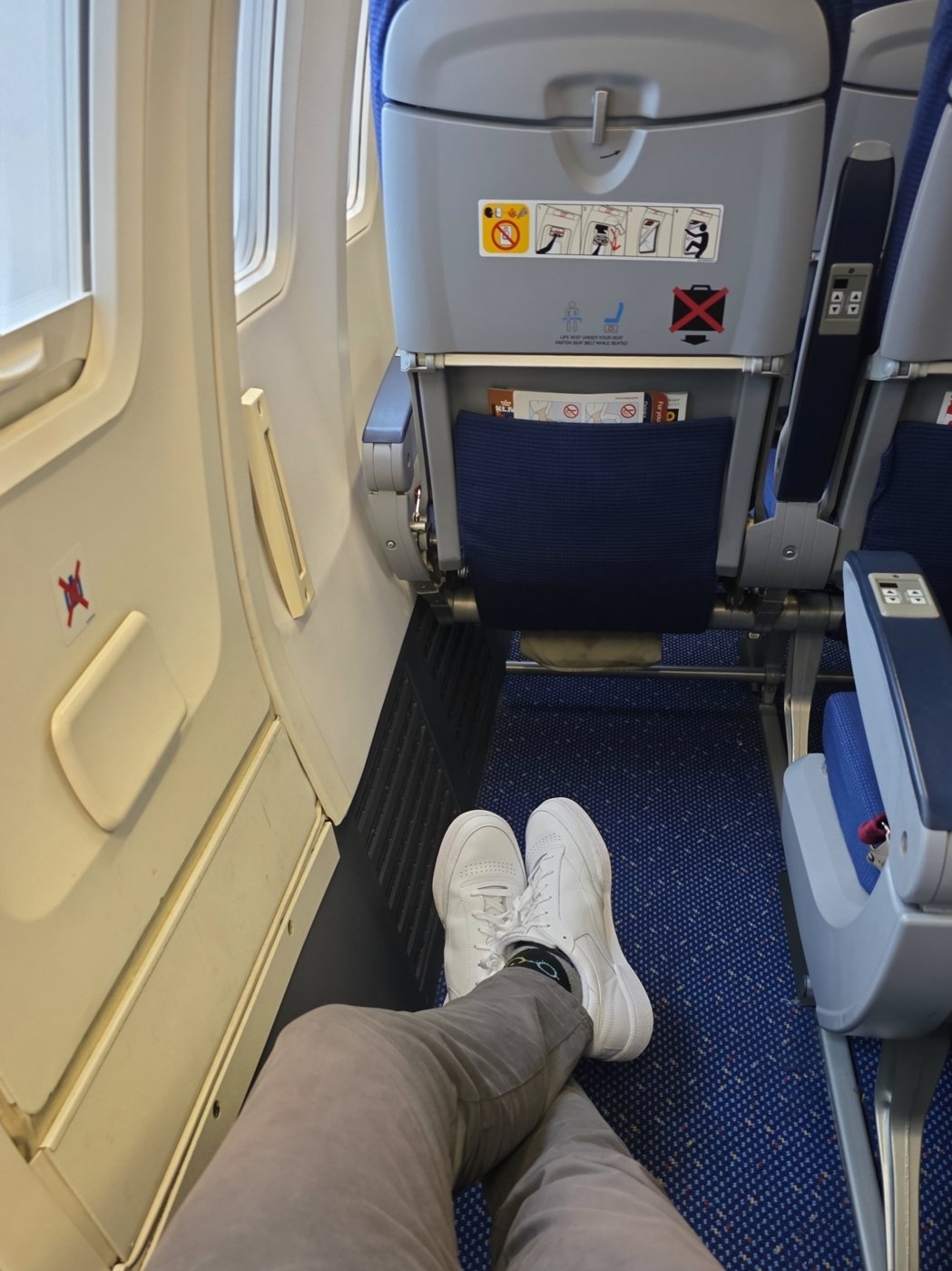
This time it was a short trip instead of a single training day. I flew into Birmingham first, with a bit of extra legroom, and the taxi to Nottingham was already waiting when I got there, so from the moment I landed I didn't have to think about a thing. Which is nice. I had a flexible ticket, which meant free changes at any time, just to be on the safe side as Michael was still qualifying when we spoke a while back, and FastTrack at both Schiphol and Birmingham, neither of which I used 😊
The hotel (the Best Western Plus; there are two, I think, a regular one and a Plus. Old, but the beds are lovely) was well placed, a mile from the snooker centre. And as it happens I love a good walk. The weather was chilly but dry all week, so every day got off to a nice start. Ohw, and there was a good breakfast, which is how you want to start a day at the snooker table, of course: well rested, relaxed and on a full stomach.
There was one catch, though. Two days before I left, I got out of bed and suddenly heard a "crack" in my foot. Probably a broken metatarsal. It hurt a lot straight away and I could barely walk, so that's been a challenge these last few days. But, I wasn't going to cancel, of course.
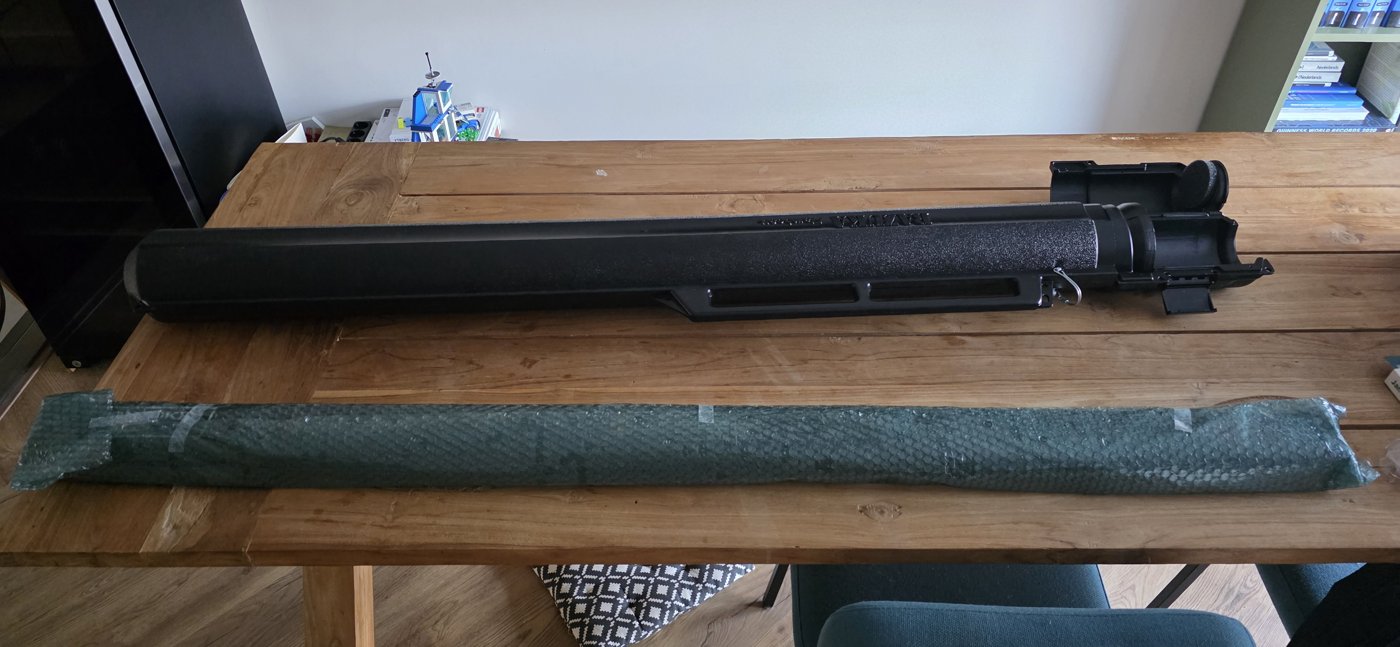
"Going fishing?"
And then there was my cue, which had to arrive in one piece. That was a bit nerve-racking, if I’m honest.
However... I bought what's known as a Bazuka, a sturdy tube made for carrying fishing rods and other tackle. At home I wrapped my cue case in bubble wrap (and took some spare sheets with me) and slid it into the tube, and at the airport I was able to check it in as hold luggage. I flew KLM, and if you book hold luggage with them, you can check in odd-sized baggage as well, as long as it's no longer than 158 centimetres. Otherwise you pay extra: €70, to be precise.
So, several people asked me about it on the way: "Going fishing? Lovely, I've got one of those myself." When I told them it was a snooker cue in there, not a rod, and that I was off to Nottingham to practise, before you knew it we were chatting away; it’s not something people hear every day.
Sunday: a good three hours' practice, and suddenly Barry Stark
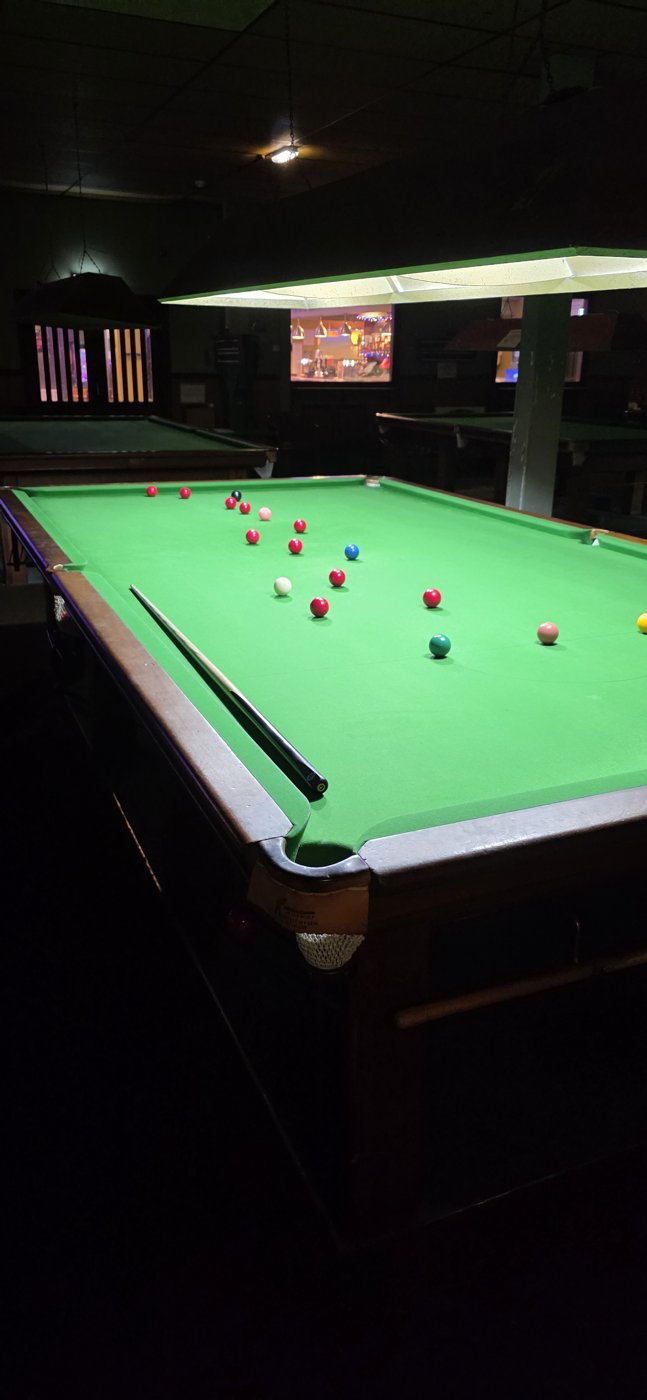
I landed in Birmingham on Sunday morning, and that same day I was already at a table in a Nottingham snooker club (the same club where Michael has his private room) for a session of more than three hours, my longest of the year, up to that point at least. It took me about fifteen minutes to get used to the tables, and after that it went pretty well and I played nicely. A lot of tired old stuff in there, but personally I think that's part of the charm.
Halfway through, I spotted Barry Stark walking past, a living legend among snooker coaches, certainly to those in the know. He'd been practising himself, it turned out, and was on his way home, yet he still took the time for a quick chat and a photo together. He even opened his cue case and showed me a couple of rest grips belonging to players we all know.
He also told me about Kyren Wilson, the 2024 world champion, who he was already working with when Wilson was still young (14, if I'm not mistaken), and about how they adjusted Wilson's stance, and why, and you could tell from every word how proud he is of that (and rightly so, of course). Great stuff. Wilson himself also called him "an absolute legend" on ITV last year.
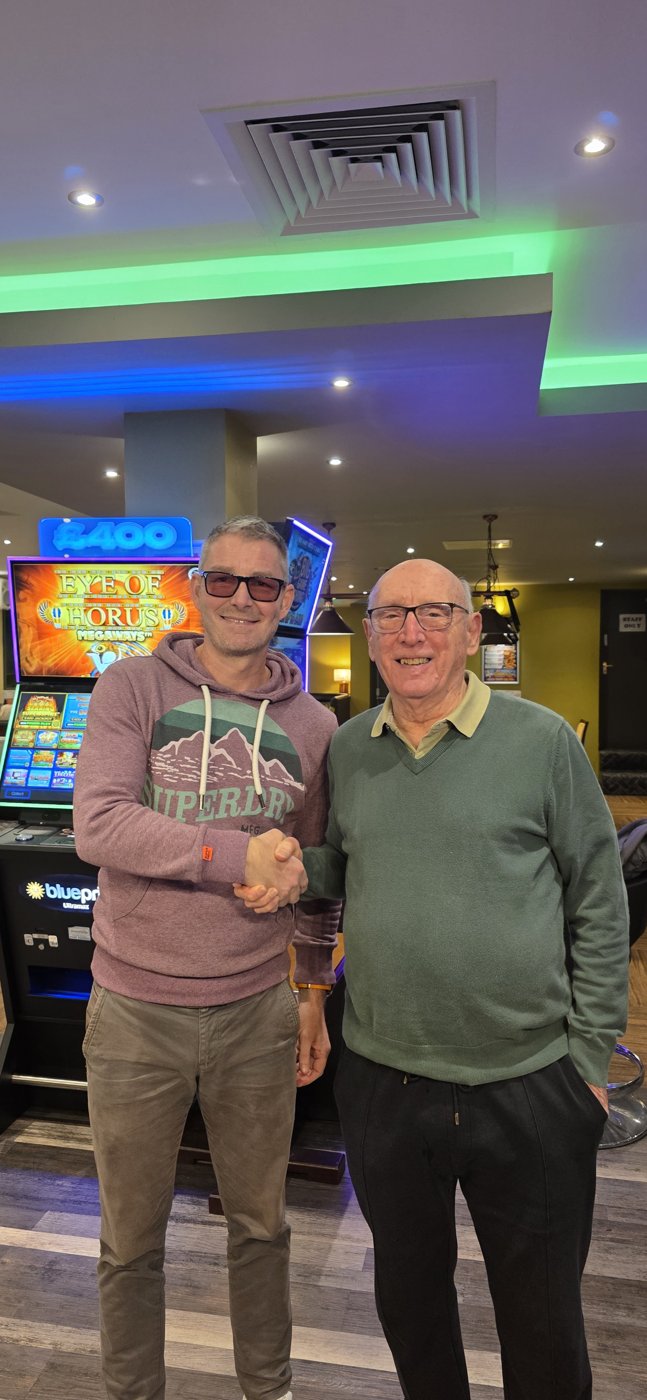
15 minutes with Barry is enough to see how much he knows and how happy he is to be able to pass it on. Encounters like that are underrated, if you ask me, and I hope that one day I can share what I know in the same way, or similar, whether it's about snooker, technology, career or whatever.
Monday: a good four hours with Michael Holt
The next morning it was time: I was at Michael "The Hitman" Holt's private table from about a quarter past ten until half past two. Before he said much at all, he wanted to see me play: first I had to clear a line-up of some twenty or twenty-five balls so he could see how (and, more importantly, where) I strike the cue ball, and that became the starting point for the rest of the day.
The first thirty to forty-five minutes were mostly theory (apart from the line-up), and after that we were at the table for most of the day. We (well, he) took plenty of photos and videos, which is uncomfortable and instructive at the same time, because all of a sudden you can see what you've felt for years without ever (properly) being able to see it. That applies a little less to me, since I've only been playing more seriously again for a few months, but you get my point, hopefully.
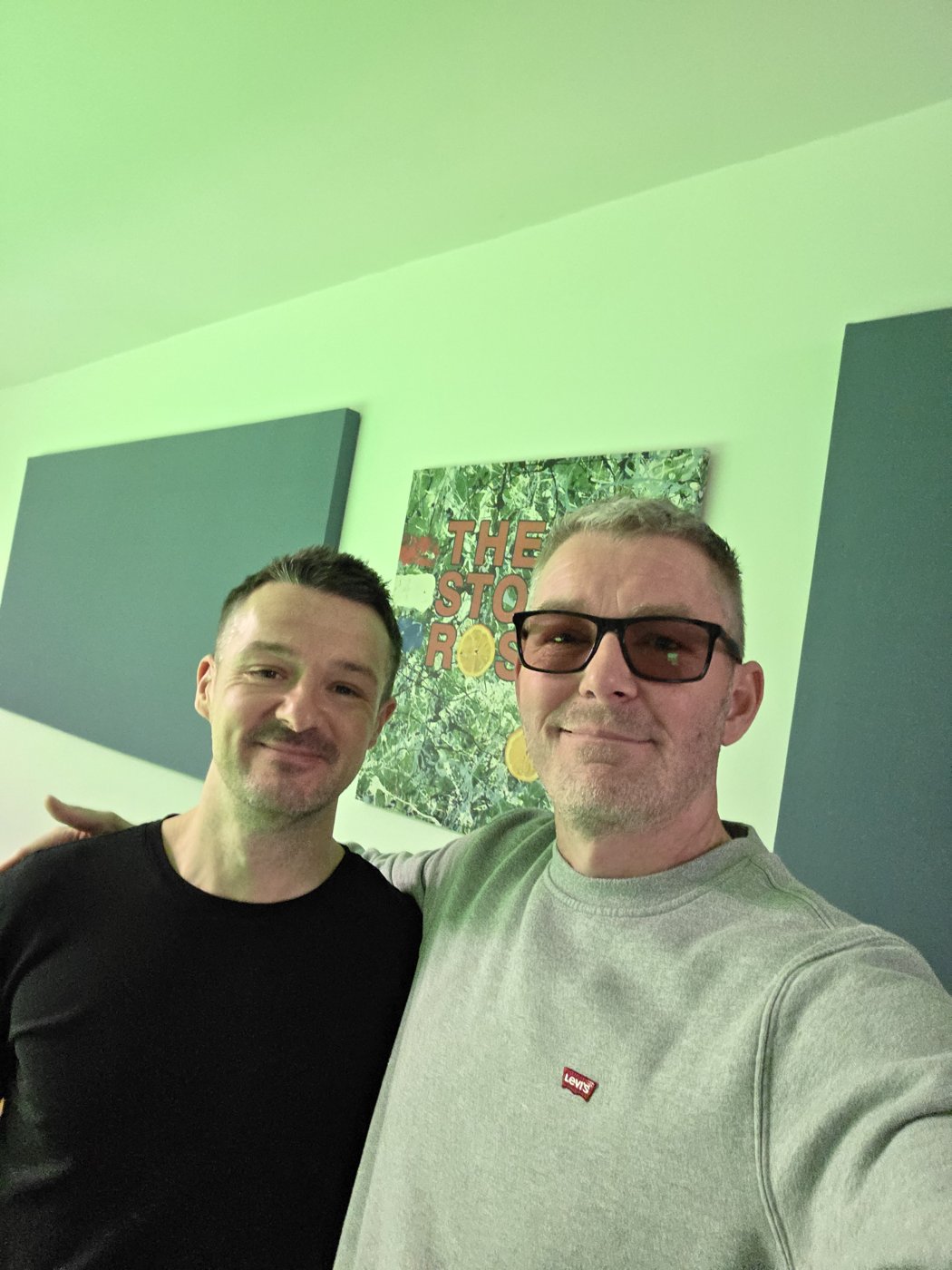
What struck me most was everything he didn't do. You might expect a coach to analyse your technique from top to bottom and rebuild it, but nothing needed changing in my grip or my stance, for example. According to Holt, you don't miss balls because of how you stand. Very much up for debate, of course (Barry, for one, is bound to see it differently), but once you hear the story behind it... He mainly looked at what would help me get better, both now and in the future, and that turned out to be a handful of small things that other people probably wouldn't even notice (assuming I ever manage to apply them and carry them out properly, of course), but they make (or at least could make) a big difference to me.
As for what those things are exactly, well, that's hard to explain and I'm not going to try. They don't apply to everyone either: they suit the way I play and the mistakes I make, my inconsistencies and so on, and for someone else they could work out completely differently. What I can tell you is that they were already working there and then. At one point, on a fast, tight match table (a STAR, with new balls and a cloth only a week old), I knocked in six, seven, eight long pots in a row, and what felt awkward at first soon started to feel a lot better. Plus a little 40+ break at the end of the day, in a frame against Michael. It made me think about the “old days”. Great fun.
No guarantees whatsoever, but a change is as good as a rest, as they say.
He was honest too, which is perhaps what I value most of all. He tells you what he sees, the good things included, and hearing those matters just as much, because then you don't have to keep correcting yourself. And there was a fair bit of "no, no, no, mate, that's not how we do things" in there too...
He also has some great (and inspiring) stories about the pros, names you'll know from TV (he's been around the game for a good few years, after all, and knows nearly everyone), but he doesn't tell them to impress anyone. He uses them to explain something or make a point, and it often comes down to the fact that you're nowhere near as special as you think (or would like to be, which might apply to some people 😊), and that's nice to hear.
One thing I will give away
A lot of the stories (proof included, but I'll leave that aside for now) came back to this... Hardly anyone strikes the cue ball dead centre, not even the top players. Holt doesn't know anyone who truly hits it dead centre, not in today's top 16 or top 64, not in the last twenty years, and not even before that. And that includes the nearly 800 people he's coached so far. Everyone is off to one side, left or right, some of them by quite a way, and none of them really chose their side; it usually develops on its own.
That's fine, as long as you know how to deal with it. You play 90% of your shots with a bit of (helping) side as it is anyway, don't you?
"The middle of the cue ball doesn't exist," says Michael, half-joking, of course.
Almost everyone thinks you're supposed to hit it dead centre, most of the time. Well, plenty of people talk about it, anyway. But what counts is knowing your own bias. And what to do with that knowledge took up much of my day, but that part stays between Michael, me and the table 😁. Sorry.
Will all this make me a better player? No idea, we'll see, but I'm definitely going to work on it. Then again, if I'm honest, that wasn't the idea behind this trip in the first place. Or at least, not the whole idea. It's brilliant to be able to do something like this, and to get the chance to. Grateful is the correct word here, I feel.
I've been practising (again) for about five months now and I'm still enjoying it a lot, and that's what counts. An almost daily outing. I do need to start playing a lot more frames though. It's no longer all about winning, the way it used to be, and, for that matter, the way it was often enough in my adult life as well (too often, for too long). And I still have my moods (like many snooker players I know 😅), but I deal with them better than I used to, and I hope it stays that way.
Tuesday: another good four hours
To wrap up... The day after (Tuesday), I put in another four hours and change, working on everything I'd picked up on Monday. Including an extensive summary to look over whenever I feel like it. And on Wednesday I flew home (I'm writing some of this on the plane back), just as relaxed as on the way out, with the taxi already booked and the cue safely back in its Bazuka. And, by the way, that thing really does look like a bazooka.
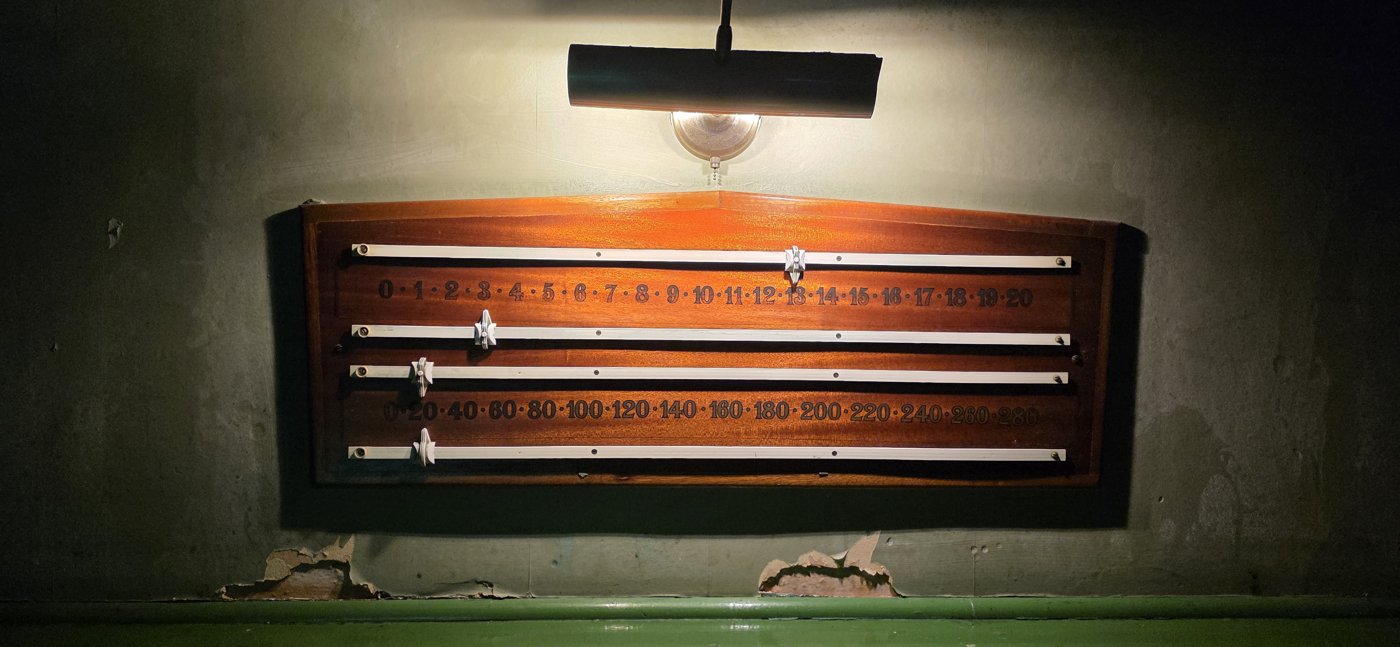
Mind you, that Tuesday was hard work: on my own, focused, and this time without anyone saying "no, no, no, mate" now and then. I don't know how many of you regularly practise for three or four hours on your own, but it's no joke. Over an hour of close-range play around the black and pink, about an hour and a half of long pots, and a few clearances and line-ups in between. Michael was in that day as well, coaching, and we had a quick chat in between while I was practising.
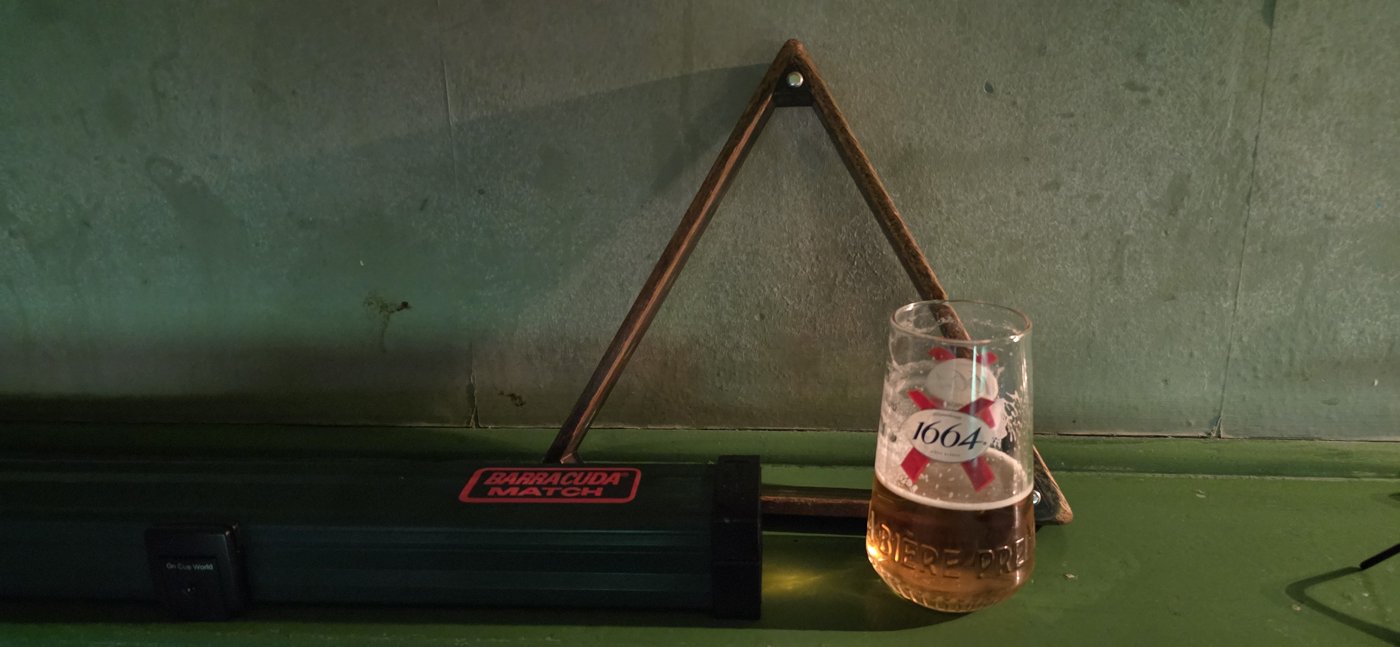
After about two and a half hours I stopped for about 45 minutes for a pint, because, I mean, when in Britain... and as far as the English are concerned that even applies at nine in the morning. And who’s sitting there? Barry Stark, again. They've got TV screens up all over the place, the snooker centre included, and the Champion of Champions tournament was on, so I spent the whole break watching snooker with Barry. While we watched, we talked about who he's been coaching (possibly a very big name soon), a bit about his career, other sports he's played, what was going on in the match and what we'd do in those situations. Absolutely brilliant.
The last half hour was hard going and I did start missing a bit more, but that's how you build up stamina, I kept telling myself. Very pleased. Though my neck and shoulders are properly aching now.
I didn’t meet anyone to play with, unfortunately, as they all came in duos. But that’s OK, I came there to “study” the table anyway.
I know what to work on
Michael, thank you for your honesty, your stories, your hospitality and your guidance. If I have questions about my training, or about snooker in general, I know where to find you, and if you ever have questions about AI, you know where to find me 😅 I wish you and all your loved ones nothing but the best. We go again!
I'm coming home with a plan, knowing what to work on, so that's what I'll be doing. I expect it'll get a little worse before it gets better, as it often does.
#IKnowWhatToWorkOn
Try it at the table
Don't worry too much if you notice you're not quite hitting the cue ball dead centre, because that goes for almost everyone. At your next session, film yourself playing a few straight pots, from behind and from the front, and see which side you end up on. You don't need to do anything with it yet; what matters is that you know.
Kit list
If you're wondering what it all cost me (as you might be interested in going yourself), have a look below. Nothing out of the ordinary, and you can always do it cheaper, or spend more, of course, but at least it gives you a good idea. Bear in mind that Michael (if that's who you'd be coming for) isn't available every day of the week or month: for one thing, he's still a professional snooker player, so he's on the road now and then.
What did it cost?
Roughly, as prices depend on the dates and when you book.
- Flight: KLM return, Amsterdam to Birmingham, €285.04 for a flexible ticket (in November you can find it from about €160).
- Extra legroom: €73.98 for the seats, there and back. Other flight extras: the free-changes option €29.97, baggage service €6.95, FastTrack at Schiphol €5.99 (turns out you can get it for free, and I didn't end up using it) and in Birmingham €14.55 (which I didn't need either), and admin fees €29.90. Flight and extras together: €446.38.
- The Bazuka, bought for this trip, cost €119.
- A TSA lock for the Bazuka, also bought for this trip: €20. To keep it shut, but also so airport security can open it.
- Hold luggage: for the Bazuka, up to 23kg, included in the flexible ticket.
- Taxis: Birmingham to Nottingham and back, €208 in total. Plenty of room here too, and a touch of luxury. That saved me over two hours of travelling.
- Hotel: the Best Western Plus Nottingham Westminster, a mile from the snooker centre, three nights including breakfast: €316.75.
- Michael Holt: £90 an hour, and I was there for just over four hours. He also coaches online over Zoom, and he does group sessions too: ask him about those, as they could work out cheaper.
- Food and drink: a few hundred euros, mostly in the evenings. I didn't hold back, and had whatever I fancied, especially the IPAs.
All in, that comes to over €1,800, nearly €1,900.
You can do it for less, too. You could take the train from Birmingham instead of a taxi (about an hour and a half to two hours, with one or two changes, usually £10 to £30), fly into another airport, book a shorter session, eat somewhere cheaper or skip the extra legroom: the flight is only about 45 to 50 minutes out and an hour back. And I am sure there is more to save on.
Ready to practise? The wheel picks your next drill: free, no account needed. You can also browse the drills yourself from the menu and put together today's session: choose your categories and set your level.
Spin the wheel →